SUTTON-IN-ASHFIELD · ASHFIELD DISTRICT
Timber, composite and metal fencing, gates and railings — supplied and fitted across Sutton-in-Ashfield, Huthwaite, Skegby and Stanton Hill. A good deal of our work here is composite fencing and composite gates, often dropped straight into the concrete posts that are already in the ground. Send your measurements and a photo for a quick provisional price, or book a free measured survey.
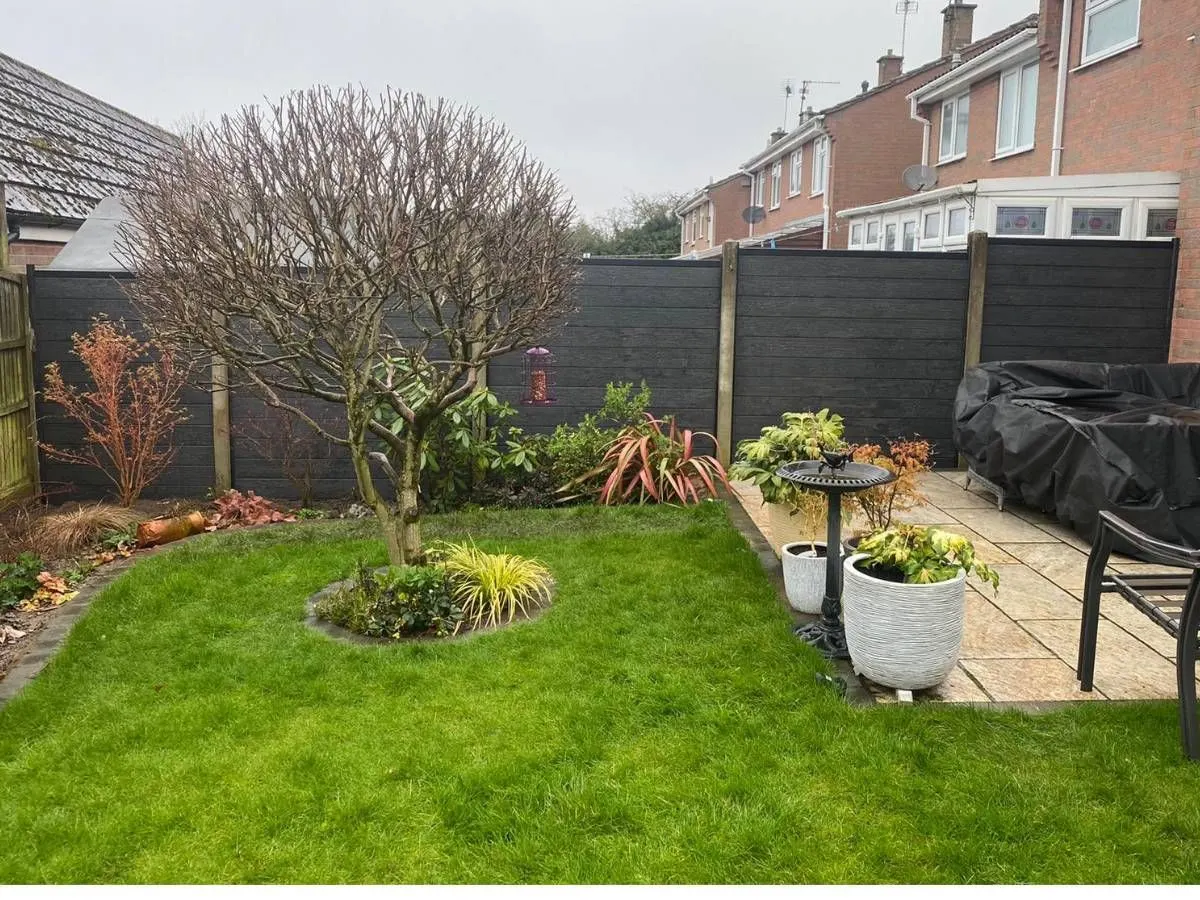
*Terms and conditions apply to our 12 month guarantee.
BEFORE & AFTER IN SUTTON-IN-ASHFIELD
This one is worth looking at closely, because it shows what a composite replacement actually involves. The timber had gone silver and green and the trellis tops had started to come away — but the concrete posts were sound, so they stayed exactly where they were.
The rear boundary
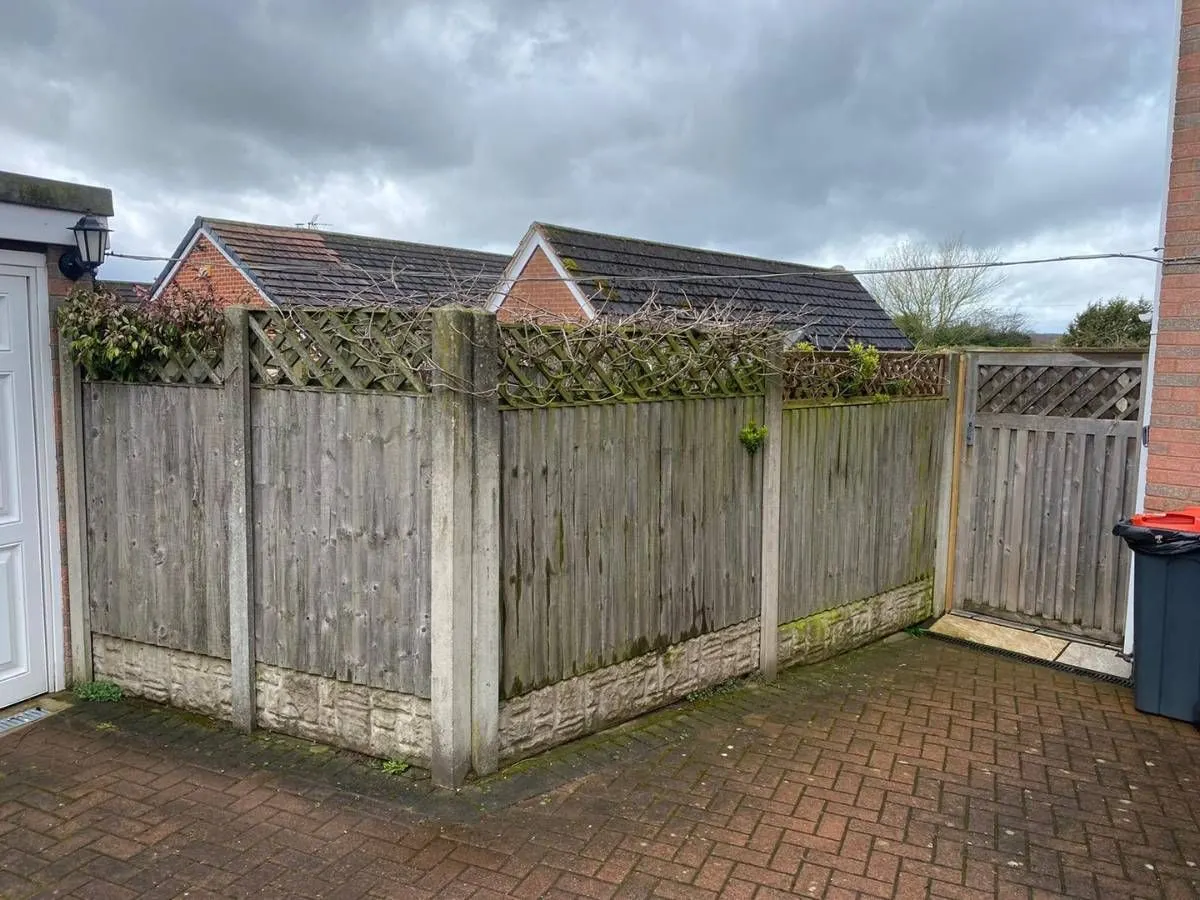
Silvered closeboard with trellis tops, algae along the lower boards and the gravel boards starting to break up. The concrete posts, though, were still solid and plumb.
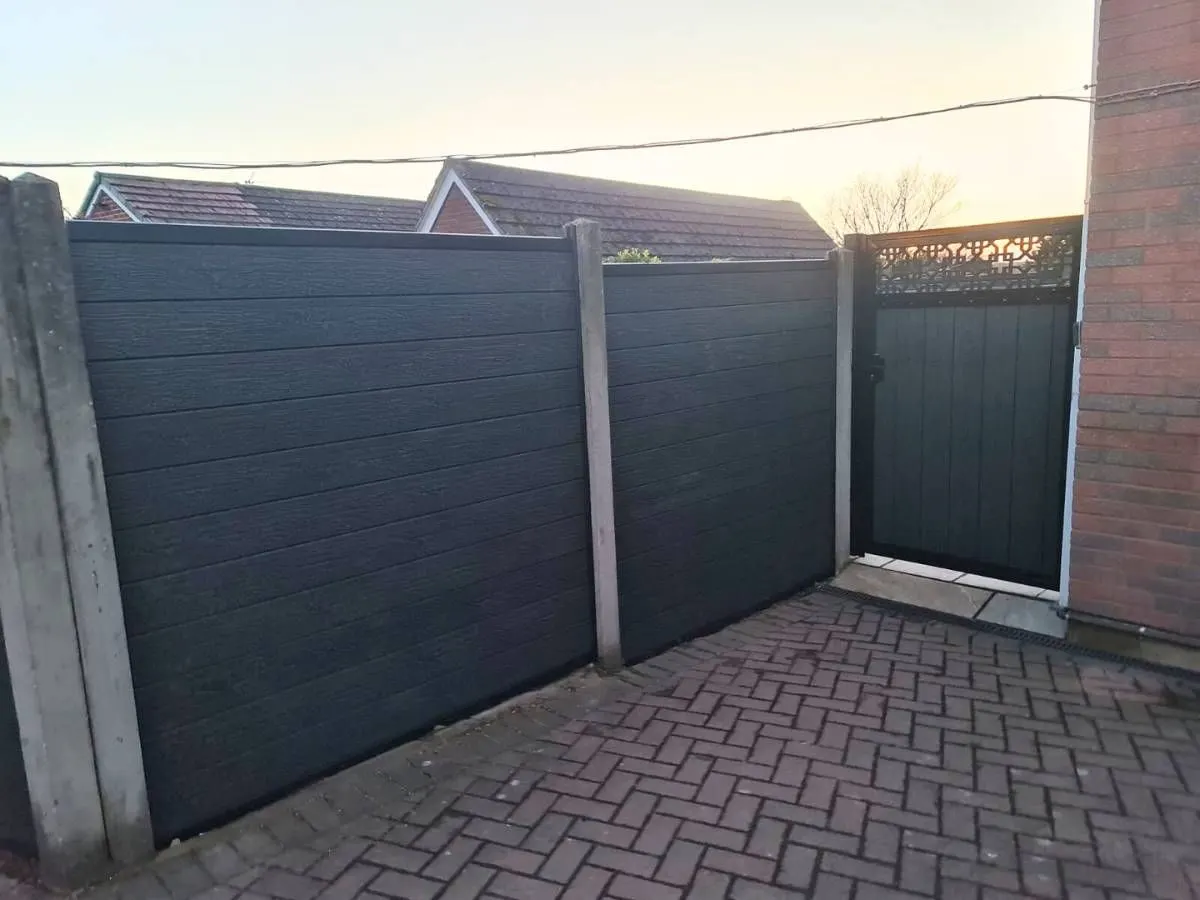
Anthracite composite boards slotted into the same concrete posts. Nothing was dug out, so there was no making good to the block paving and the job took a fraction of the time a full replacement would have.
The side access gate
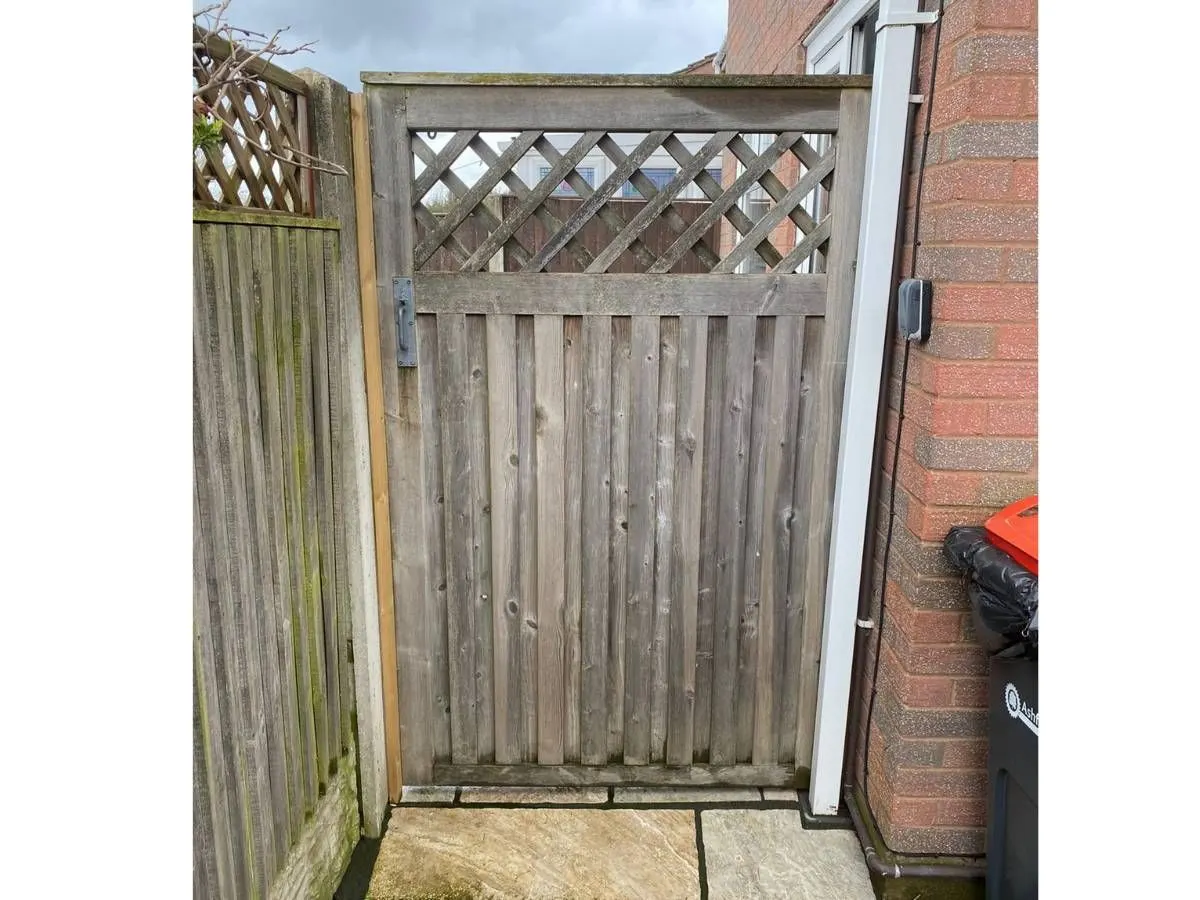
The original timber gate in the side passage, grey and dropping on its hinges. Side gates take more use than any other part of a boundary and they are usually the first thing to fail.
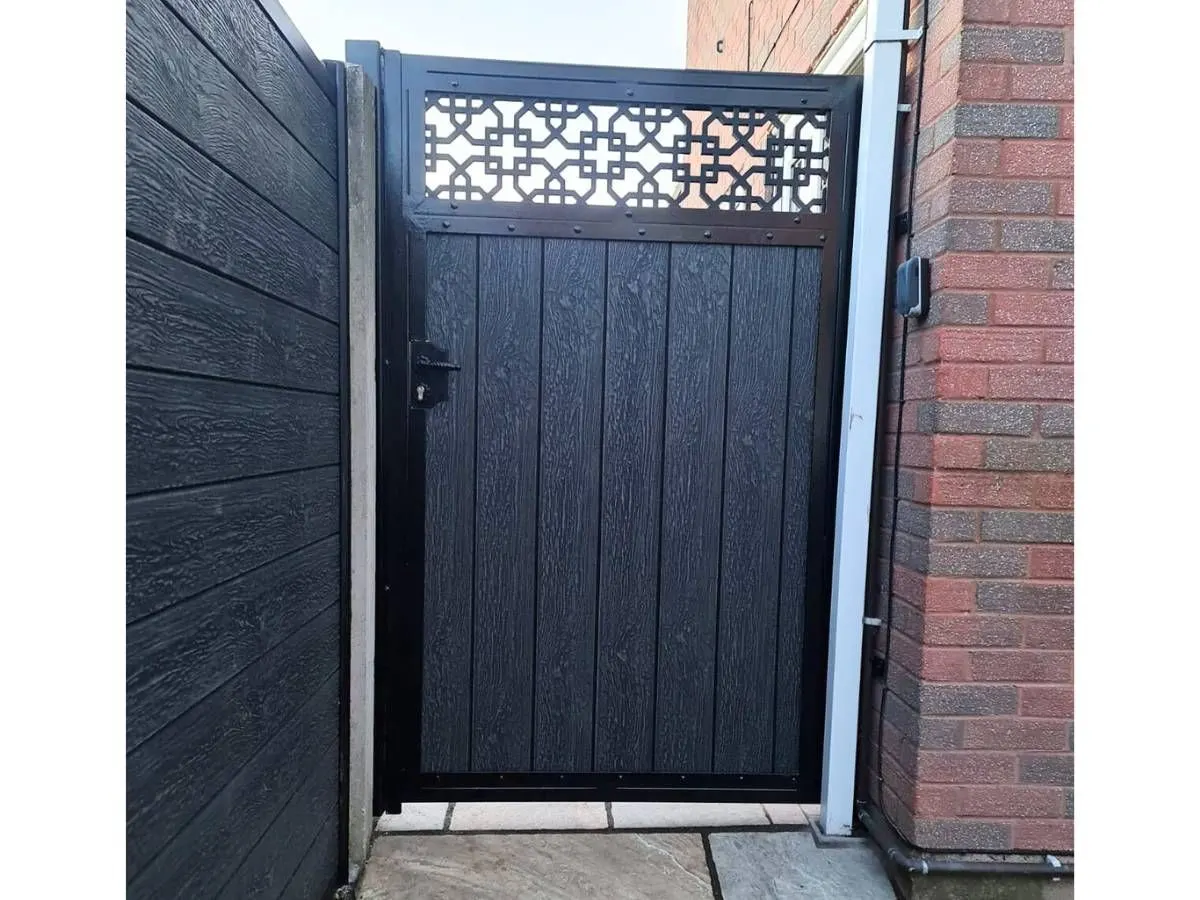
A composite gate in a metal frame with a decorative lattice top, colour matched to the new fencing. The frame is what keeps a gate square over time — timber gates drop because the frame racks, not because the boards fail.
Sutton-in-Ashfield sits in Ashfield District, and the housing is mostly post-war and later — estate semis and detached houses with regular plot widths, block paved drives and side passages running down to a rear garden. That matters more than it sounds. Regular plots mean the concrete posts are usually already in the ground at standard centres, and where those posts are sound there is often no need to touch them at all.
That is why so much of our work here is composite fencing. Composite boards drop into the same slots a timber panel came out of, so you get a fence that will not need treating again without digging out a single post or making good the paving around it.
Composite is a timber and recycled polymer board. It does not rot, warp, splinter or need re-treating, and the colour runs through the board rather than sitting on the surface as a stain does. On an exposed estate boundary that is the practical difference between a fence you maintain and a fence you leave alone.
Two things worth knowing before you decide. Composite is heavier than timber, so the posts and the fixings have to be right — which is the main reason we survey before pricing rather than after. And a composite gate is normally built into a metal frame rather than a timber one. A timber gate eventually drops because the frame racks out of square, not because the boards give up; a framed gate does not have that failure mode.
We fit composite fencing and composite gates as a matched pair where it suits — the gate in the before and after above was colour matched to the new boards — and we can supply composite on its own if you are fitting it yourself.
Ashfield District Council runs the bins here, and the rules on timber are stricter than most people realise.
Fence panels cannot go in the brown bin. Ashfield's garden waste subscription is the cheapest in Nottinghamshire at around £35 a year for the first bin and £20 for each extra one, but it is garden waste only. The council specifically names timber and DIY waste among the things that must not go in, says routine checks are carried out, and will not empty a bin that contains them. It also only runs March to December, so there are no collections at all in January or February.
Ashfield's bulky waste collection is an option for some things — around £16 for one item or £22 for up to three, with one free collection of up to three items a year — but a full run of fence panels is not really what that service is for.
Permitted development in England generally allows a fence up to 2 metres at a rear or side boundary, but only 1 metre where it fronts a highway — and that includes a footpath running alongside a road. On estate layouts with open-plan front gardens this comes up more often than you would expect.
Worth remembering too that composite panels are usually fitted with a gravel board or a base rail, which adds to the finished height. Deed covenants, conservation areas and listed buildings can all change the position, and we are not planning consultants — Ashfield District Council's planning team will confirm where you stand, at no cost.
We are a local, family-run firm run by founders Adam and Stephen, with over 15 years' experience in fencing. Sutton-in-Ashfield and the surrounding Ashfield towns are a regular part of our work, and composite in particular is something we fit here week in and week out rather than occasionally.
*Terms and conditions apply to our 12 month guarantee.
We cover Sutton-in-Ashfield and the towns and villages around it:
ANOTHER SUTTON-IN-ASHFIELD JOB
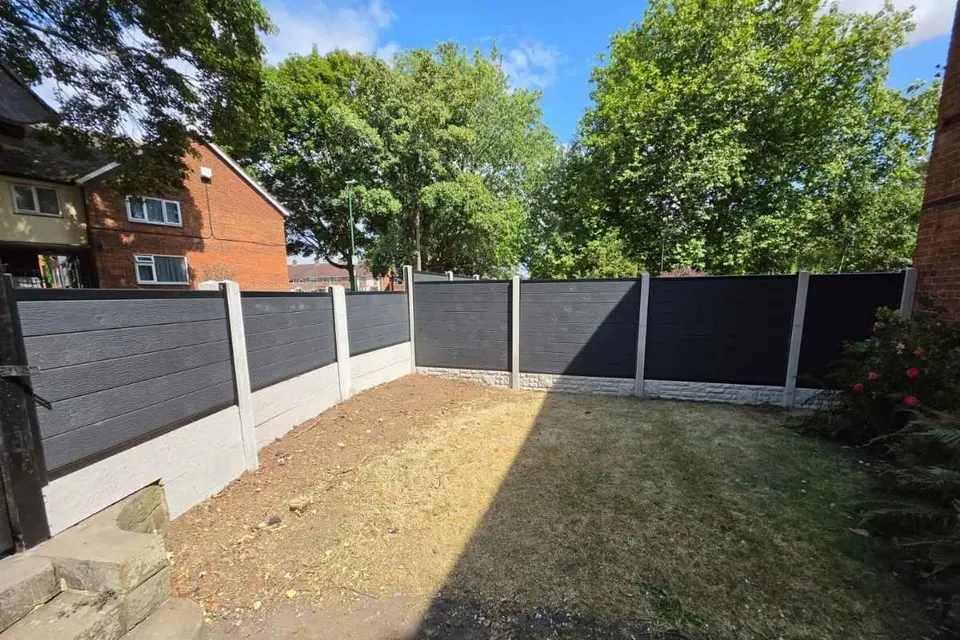
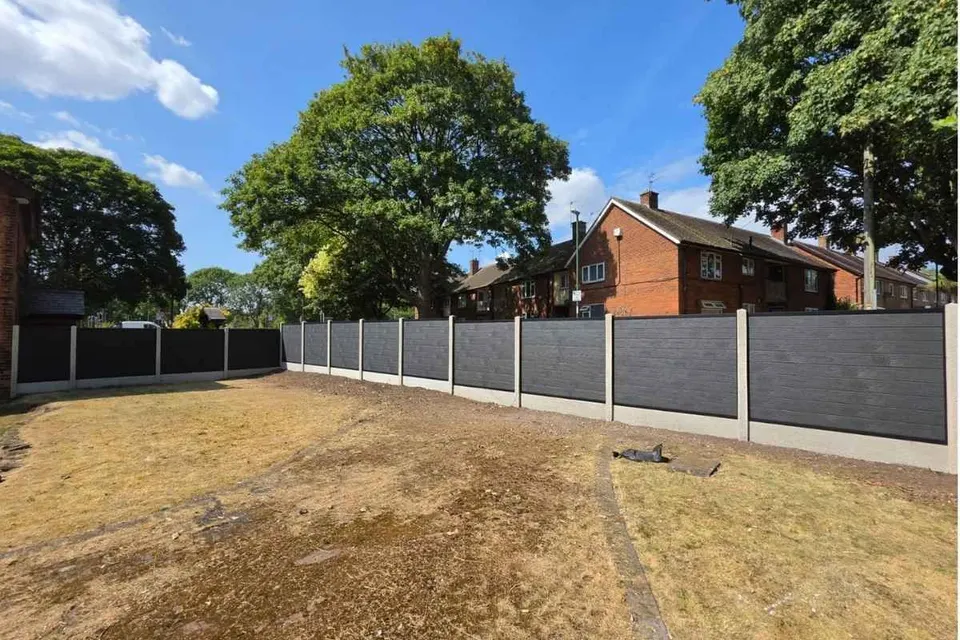
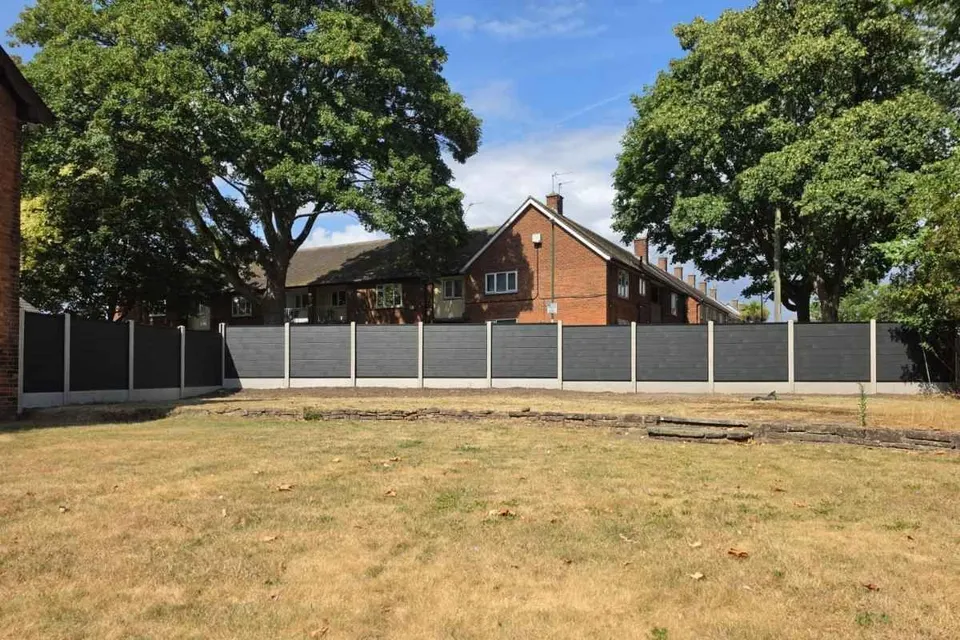
Not every job keeps the existing posts. On this one the old concrete posts had moved and the gravel boards had broken up, so the whole boundary came out and went back in from scratch — new concrete posts, smooth-faced gravel boards and anthracite composite panels. It is the other half of the decision: sound posts stay, tired ones do not, and that is what the survey is for.
The front boundary
Anthracite composite carried round to the front garden so both boundaries match. Front boundaries are where the 1 metre height rule bites if the fence adjoins a footpath, so it is worth checking before you settle on a height.
New posts, smooth gravel boards
New concrete posts set along the full run with smooth-faced gravel boards rather than rock-faced. Smooth suits composite better — the flat face reads as part of the panel instead of competing with it. See composite fencing.
The same run, wider view
The finished boundary from the other end. Setting every post fresh is more work than slotting panels into what is already there, but it is the only way to get a dead straight line back when the old posts have shifted.
All Rights Reserved | Nottingham Fencing & Gates Ltd Trading as Nottingham Fencing © 2026
Company Reg. 16650516
Waste Carriers Licence No. CBDL636235
Registered Office address: 162 Beechdale Road, Nottingham, NG8 3FH, United Kingdom