NOTTINGHAM · NOTTINGHAMSHIRE · DERBYSHIRE BORDER
Timber and composite decking designed, built and fitted by Nottingham Fencing.
A deck gives you a level, well drained space for relaxing or entertaining that you can use in poorer weather too. We build the frame first on closely spaced joists, take your old decking away, and can add steps, balustrades and lighting. Send your measurements and a photo for a quick provisional quote, or book a free measured survey.
* Terms and conditions apply to our 12 month guarantee.
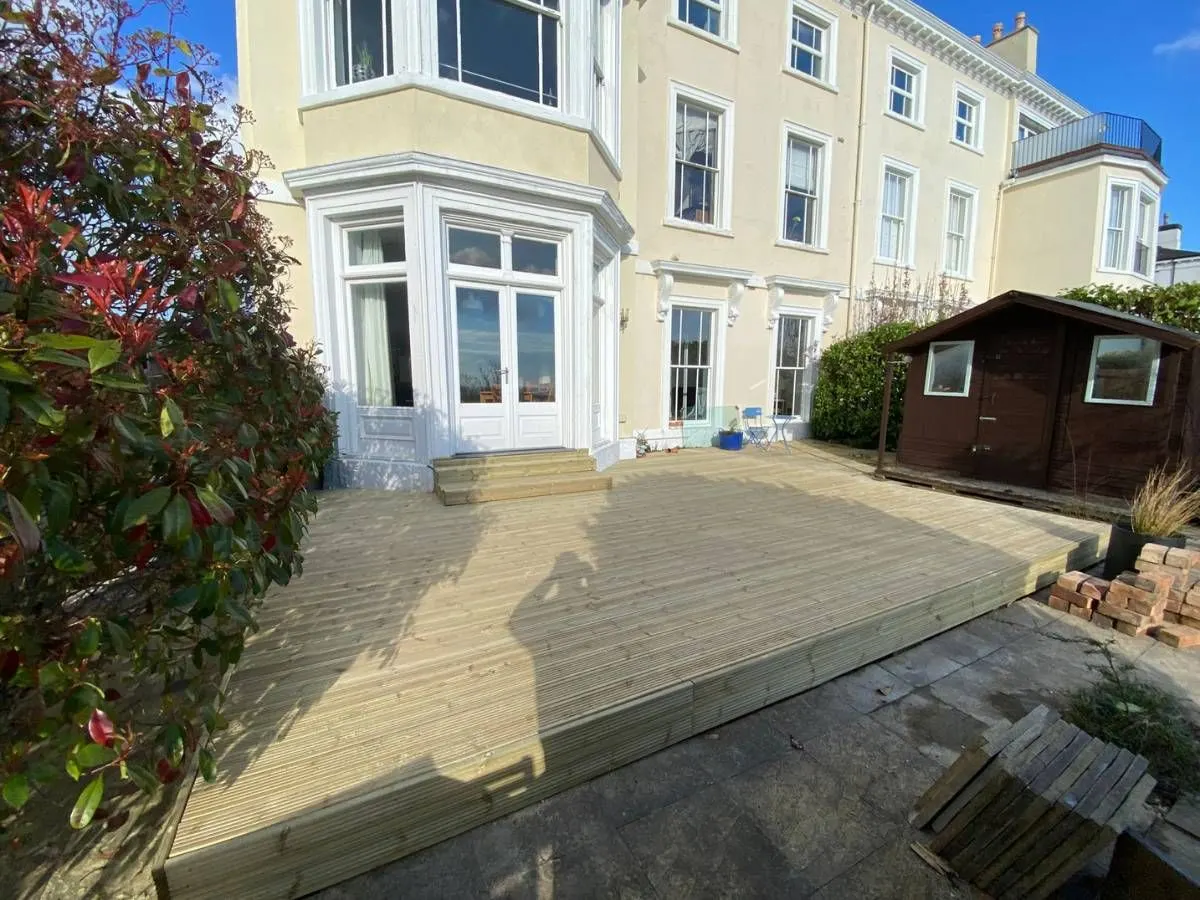
A decking platform is a fantastic way to create an area of your garden for entertaining or relaxing. It gives you a well drained outdoor space you can still use in poorer weather, and it can take an awning, umbrellas or a pergola for shelter from the elements. Get in touch to talk through your timber or composite decking plans with your local decking fitters at Nottingham Fencing.
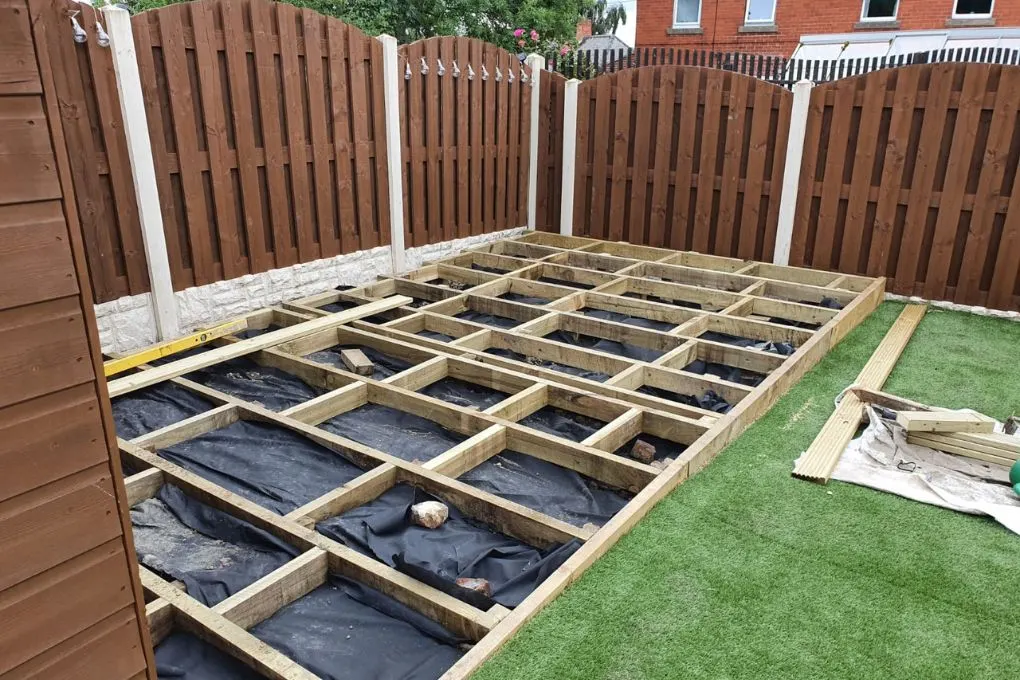
Frame on weed membrane
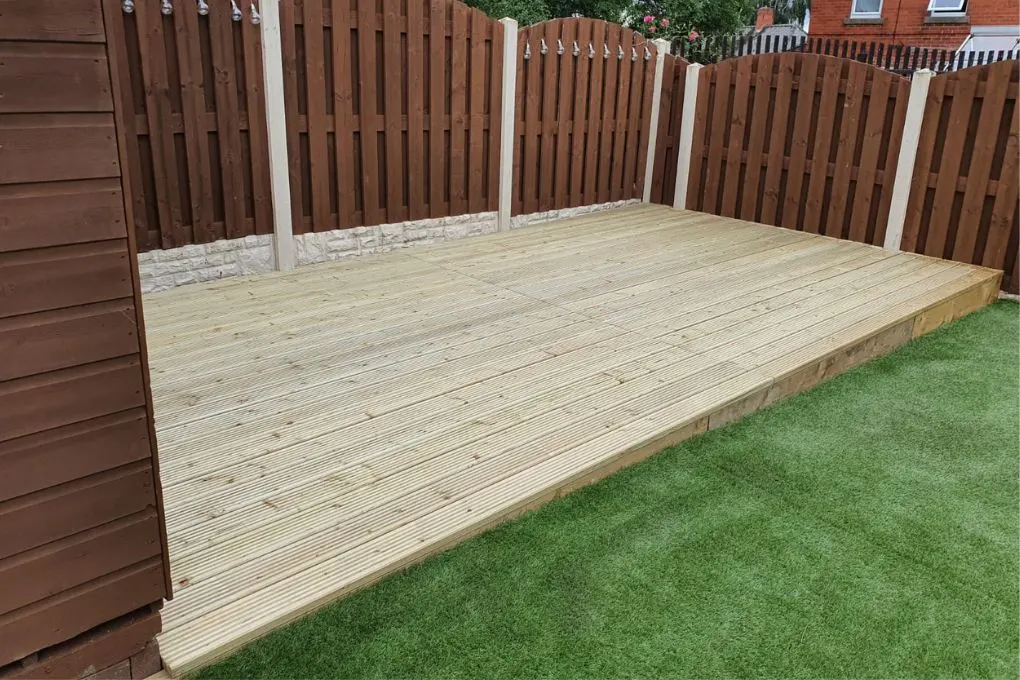
Boards fitted
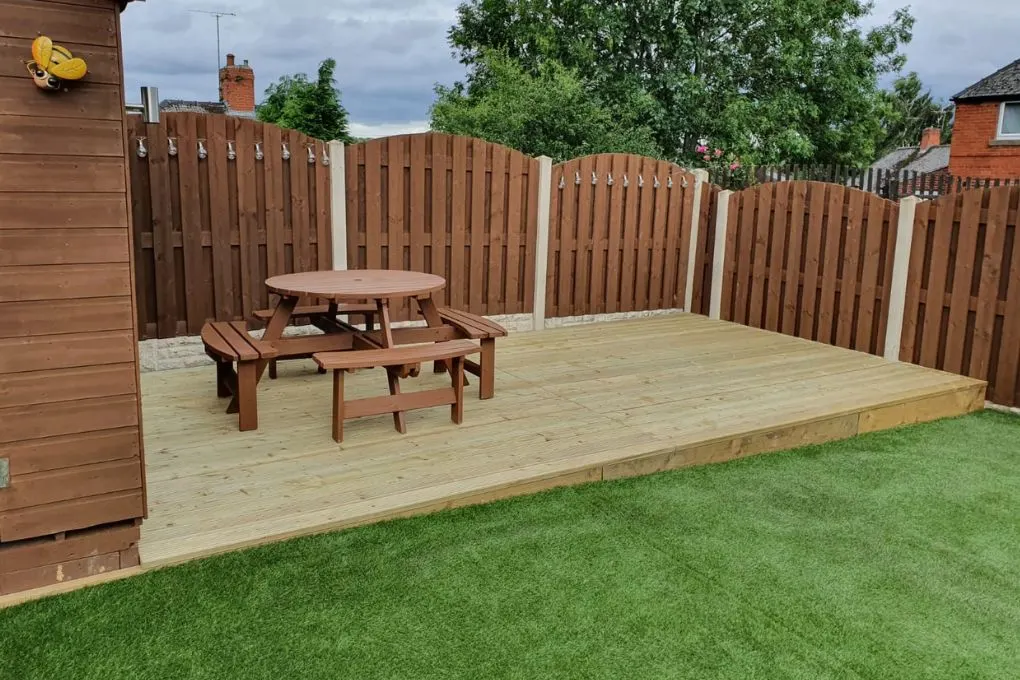
Ready to use
There are still some choices to make with decking. The main one is between wood and composite decking, with the lesser known option of concrete decking also available. A raised deck will also need steps, posts and balustrades to prevent falls, and it is worth thinking about lighting built into the deck so it stays a practical outdoor space from dawn to dusk and beyond. Below is a brief overview of the options, along with a few other things to consider when choosing which type of decking, and how much of it, to have in your garden.
Here are a few photos of a timber decking replacement we carried out in The Park area of Nottingham. The first stage was to take out the old timber decking, which went to the waste recycling centre, and then set in the new frame.
As you can see, we keep the gaps between the joists fairly small to give a firm base for the timber deck boards, so they are less likely to flex or warp over time and you can't bounce on them. It is these little things that make the difference between a good decking fitter and one who keeps costs down by cutting corners on materials and labour.
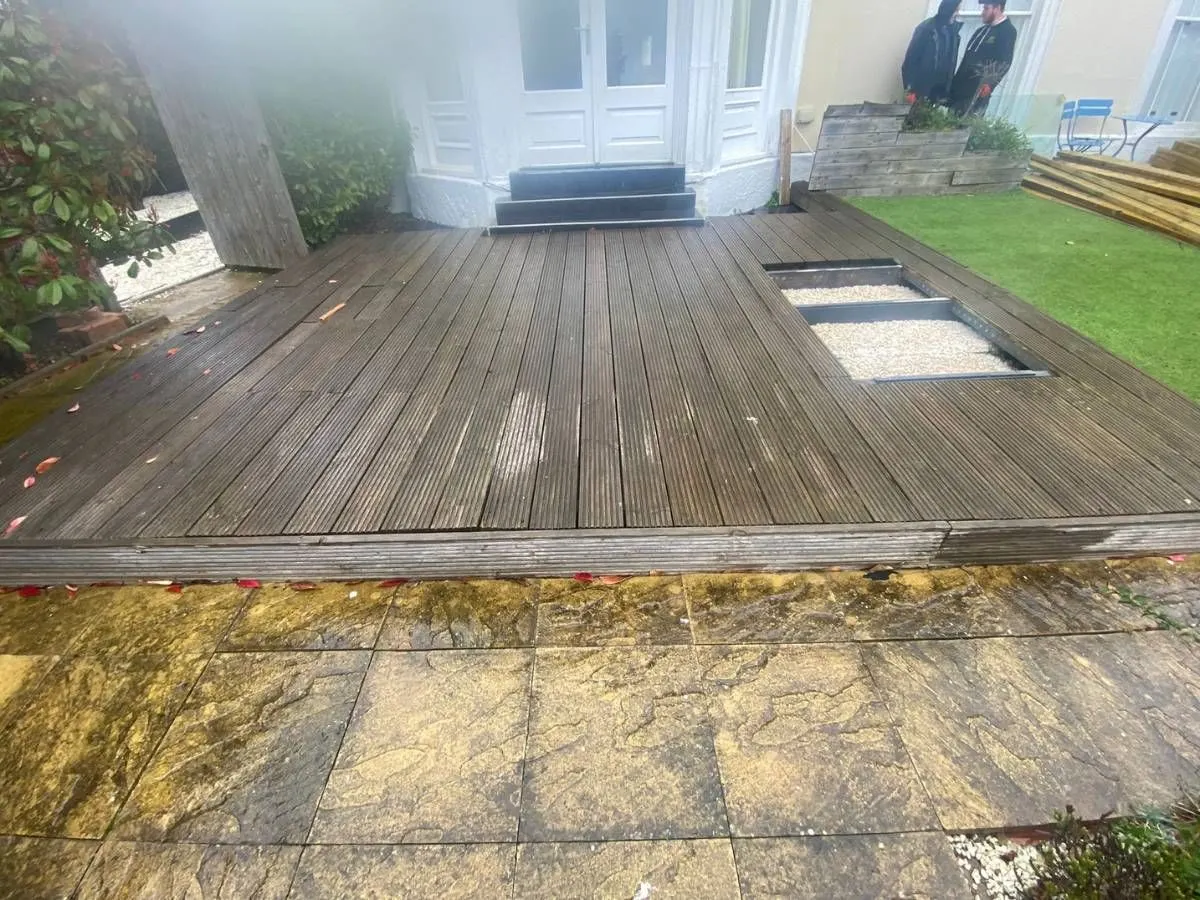
Old decking
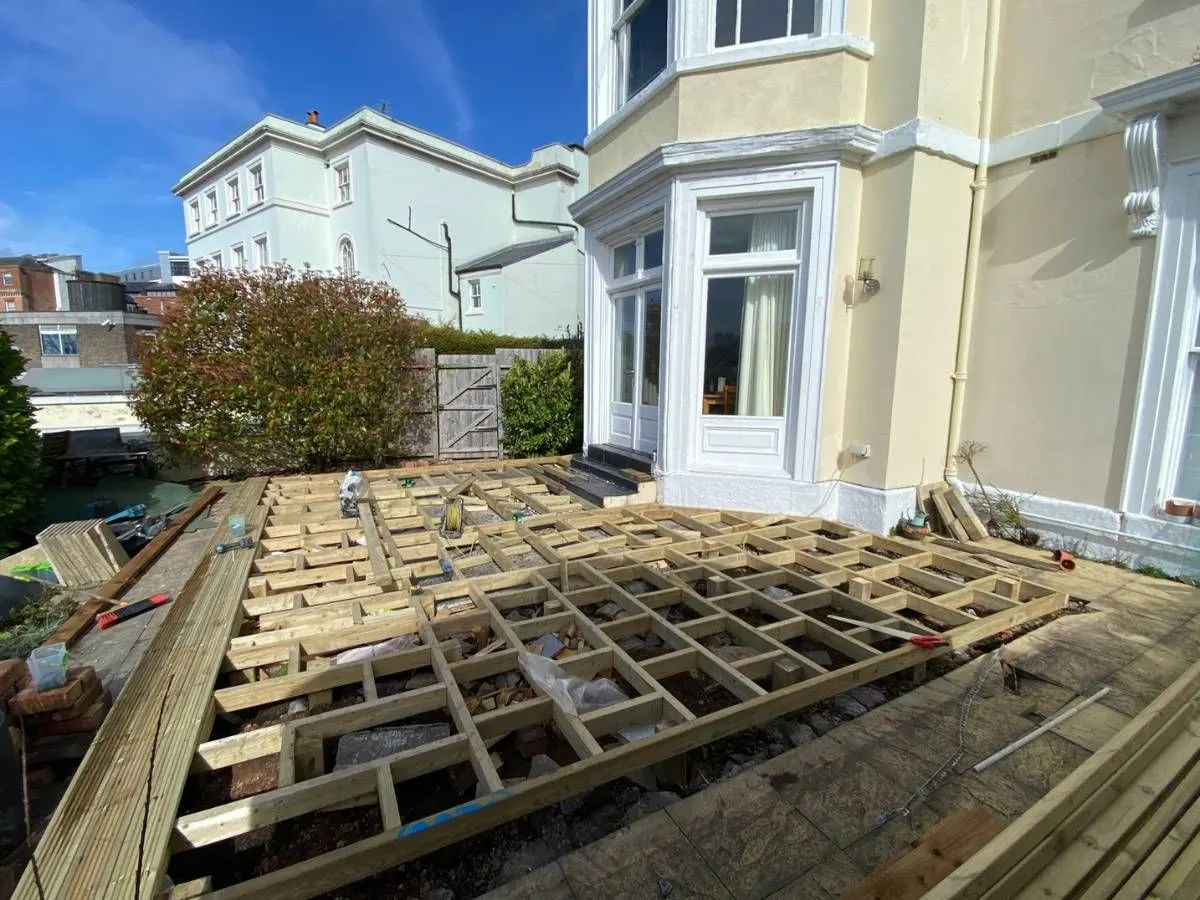
Close set joists
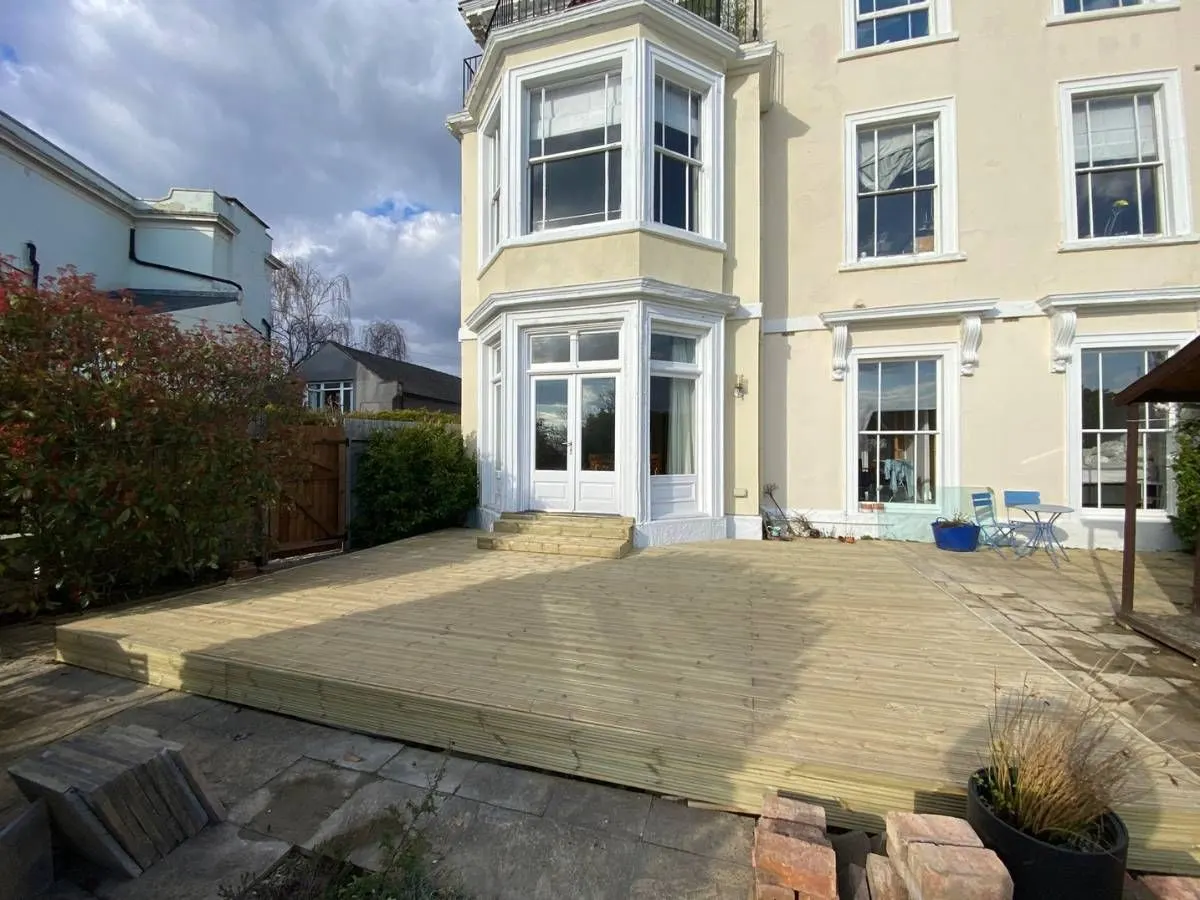
Boards laid
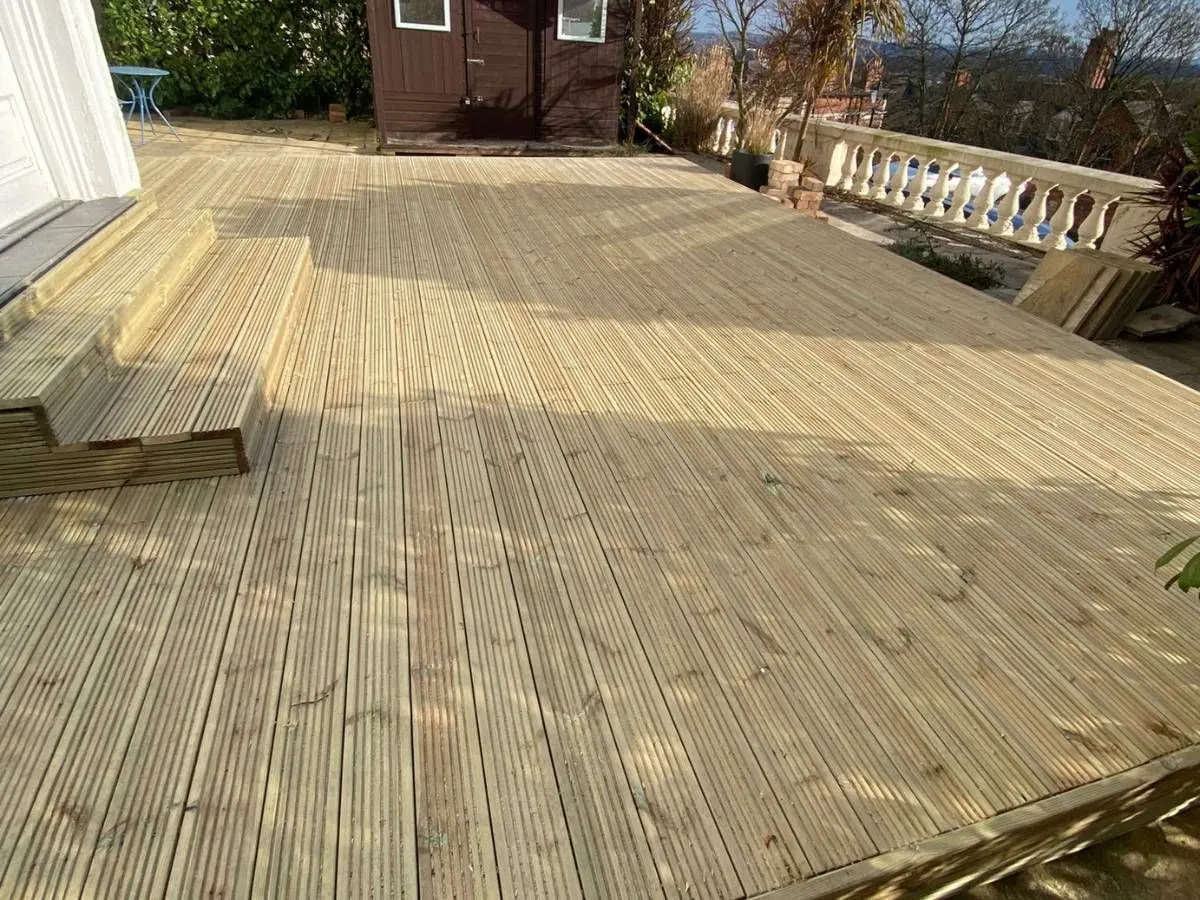
Completed with steps
Timber is still the most common material for decking, but many people do not realise it comes in hardwood or softwood. The names have nothing to do with how hard the wood is; they refer to the group of trees it comes from. Beech, ash and oak are hardwoods, while the most common softwood is pine.
Softwood is used more often because it is readily available and simple to fit, which makes it the most cost effective choice to install. It is pressure treated against insects and fungus, but it needs a little more maintenance to keep its looks over time. On the plus side, you can choose from a range of stains and oils to create the look you want.
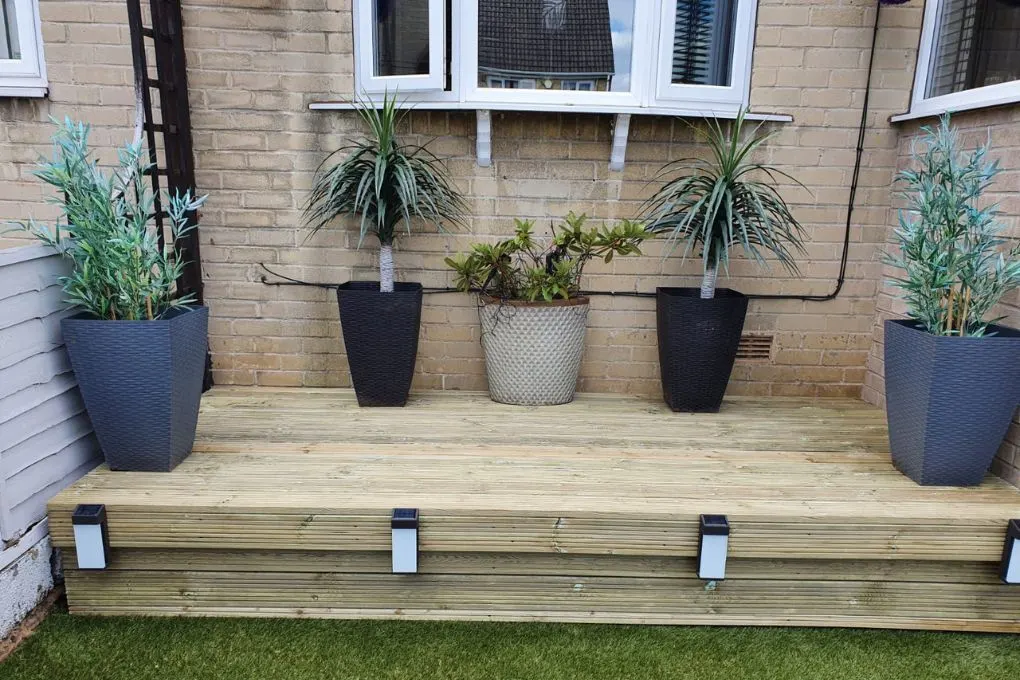
Hardwood decking is less common. It is generally more expensive, even more than composite decking, and harder to work with, which adds to the installation cost compared with softwood. Hardwood is naturally resistant to insects, fungi and decay, so it needs less maintenance than softwood. The shade depends on the hardwood chosen, and as a natural product most will darken over time.
Depending on your footwear, decking can become a little slippery when wet, more so with softwood timber. Layered timber deck boards have come onto the market as a slip resistant option for families who want extra grip. The extra layer is usually either a thin artificial grass type topping or a layer of rubber.
Composite decking is growing massively in popularity and is now the choice for more and more homeowners, for new decks and replacements alike. Because a large part of each board is made of wood particles, it has a far more authentic wood feel than plastic, and the wood grain effect looks very convincing. With a range of colours, matching steps and balustrades, it can make a striking decking area.
The plastic content makes the boards water resistant and much less prone to slips, as well as protecting them from mould, rot and fungus. No treating is needed: to clean off spills and outdoor debris, a gentle jet wash will have your composite decking looking like new again.
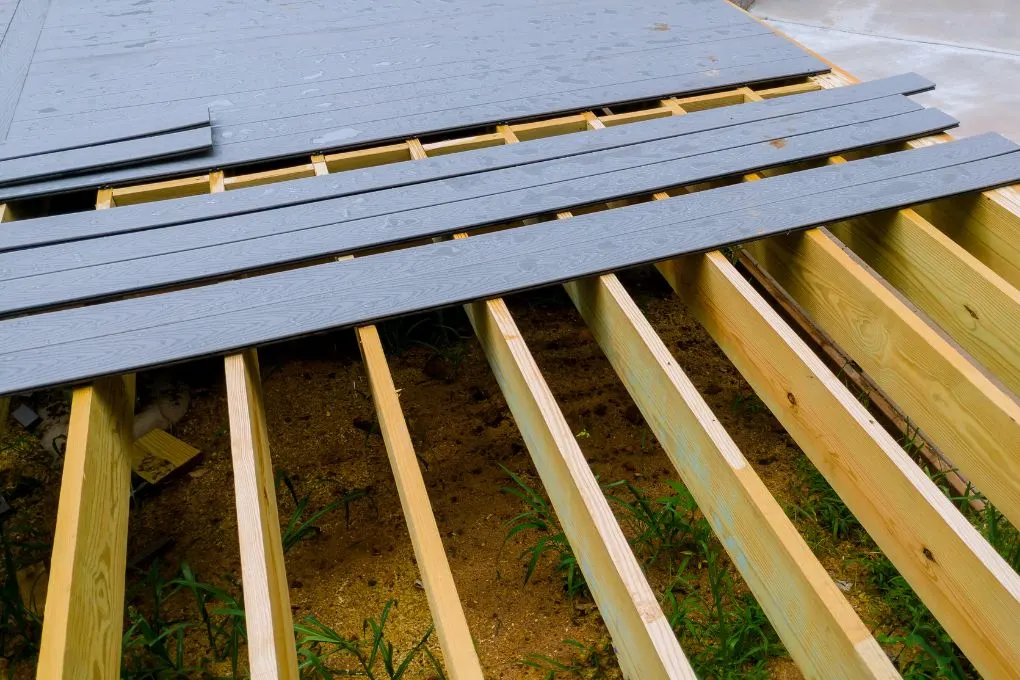
Boards over a timber frame
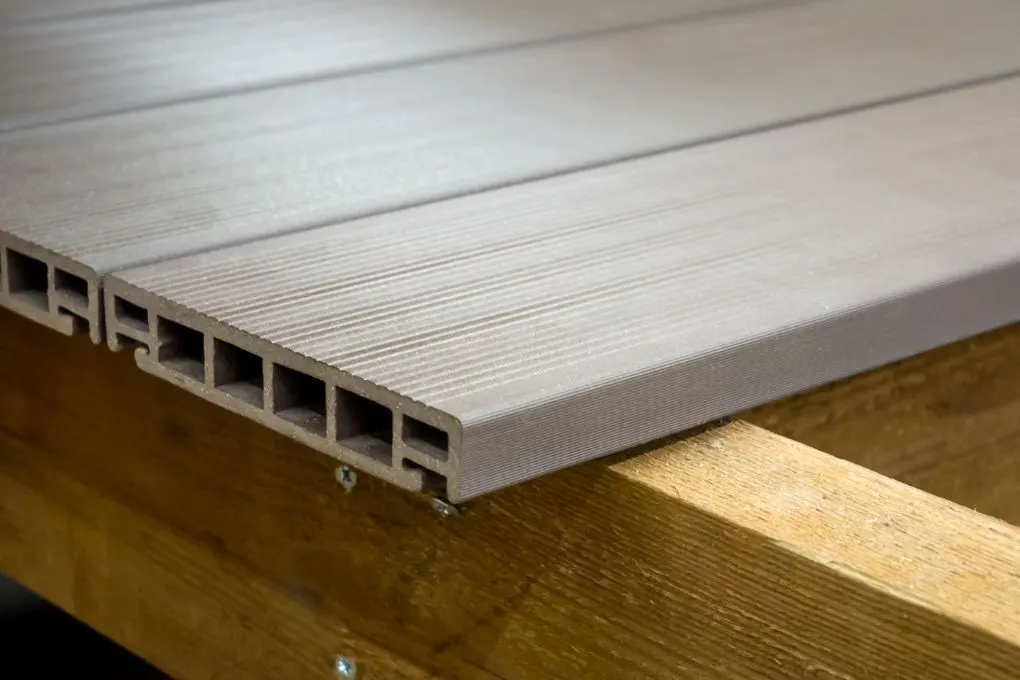
Fixed to the joists
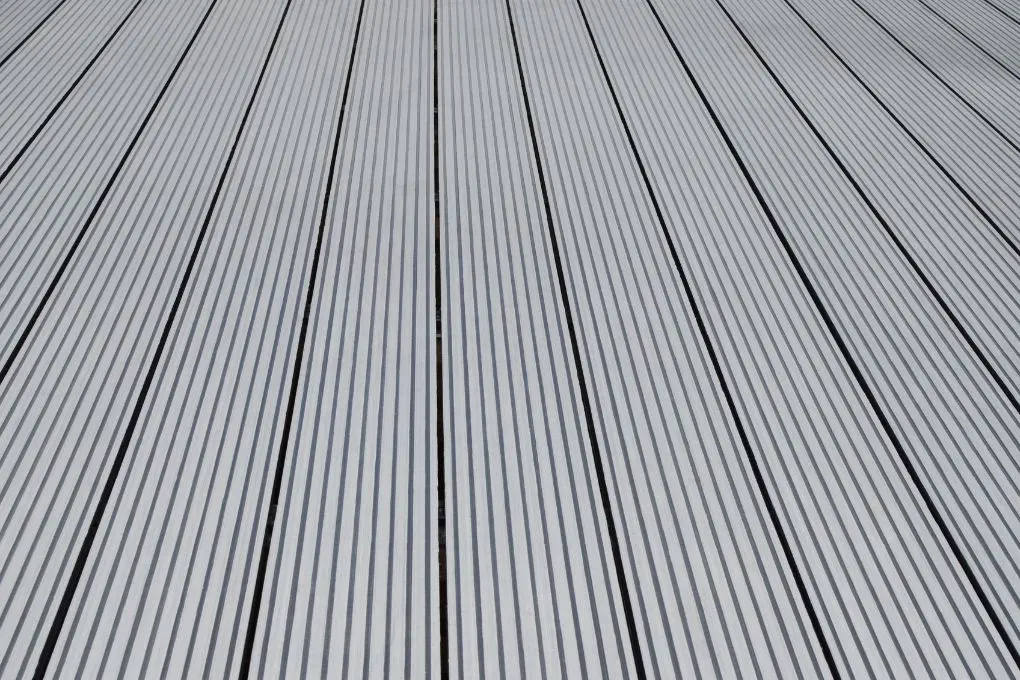
Finished grey deck
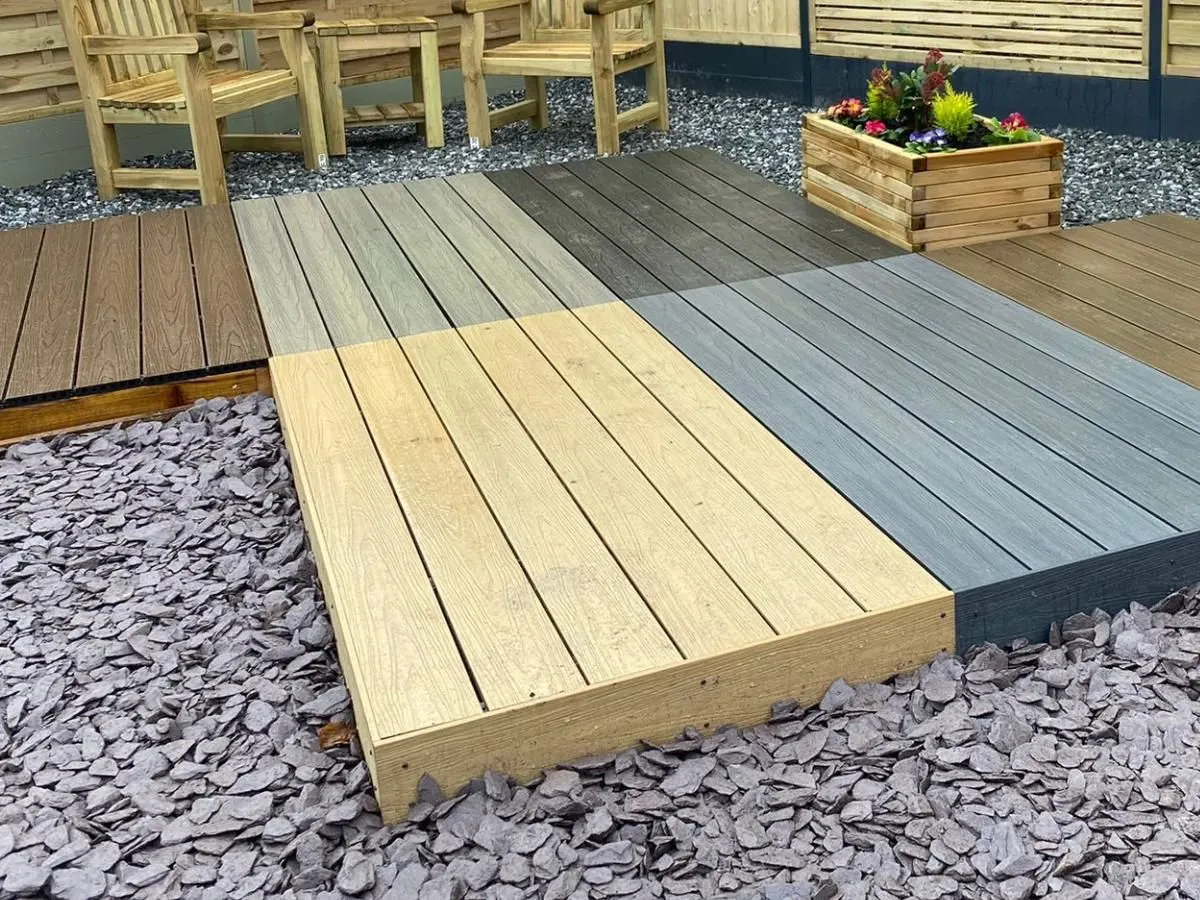
Board colours side by side
UPVC decking is made from 100% plastic, whereas most composite decking combines plastic with wood particles, and there are some differences between the two. Plastic decking is totally impervious to water and resists fading better. However, on hot days the plastic holds the heat, which can make it very hot to stand on in bare feet, especially in a darker colour. It can also expand significantly, and frequent expansion and contraction can damage the boards. Some people also feel it has a plastic look, even with a wood grain effect.
Concrete decking is arguably not decking in the true sense. It uses wood effect slabs to create a decking look, so some would call it paving or a decking effect patio rather than real decking. You won't get the same feel underfoot as wood or composite boards, but it can be a cost effective option in the right place. It is extremely hard wearing, and you could use it in one area of the garden alongside a more traditional deck in another. For paving proper, see our patios.
As with most of our services, we fit decking across towns and villages around Nottingham, and we have installed a lot of composite decking in Hucknall, Wollaton and West Bridgford. Whether you need replacement decking, new decking or paving, call us to talk through the options and get a no obligation quote.
All Rights Reserved | Nottingham Fencing & Gates Ltd Trading as Nottingham Fencing © 2026
Company Reg. 16650516
Waste Carriers Licence No. CBDL636235
Registered Office address: 162 Beechdale Road, Nottingham, NG8 3FH, United Kingdom